Icon of users

Millions of users worldwide

Dollar sign

$1000s paid daily

Prize icon

1000 surveys available right now

Globe icon

800,000+ active members

Icon of users

Millions of users worldwide

Dollar sign

$1000s paid daily

Prize icon

1000 surveys available right now

Globe icon

800,000+ active members

Yellow star

Earn up to $25 per online survey – and spend it today.

Earn Haus links you to cash-paying surveys you can take in your spare time. Share your opinions and earn real money – never points or tokens.

supply chain planning coursera answers

Works On Any Device

supply chain planning coursera answers

Earn Cash, Not Points

supply chain planning coursera answers

Easy Online Surveys

Image-Coin

Get Paid in Cash for Sharing your opinion

OR CONTINUE WITH
Google Logo GOOGLE
supply chain planning coursera answers

Earn Haus links you to cash-paying surveys you can take in your spare time. Share your opinions and earn real money – never points or tokens.

supply chain planning coursera answers

We pay $1000s each day to our community

Icon Image

$1,000,000+

Earned by members in the last 12 months

As easy as 1 … 2 … 3!

Start earning cash today in just 3 simple steps

1 supply chain planning coursera answers

Create a free account

Provide basic info and select how you want to get paid.

2 supply chain planning coursera answers

Complete surveys

Answer questions on simple surveys, giving your honest opinions.

3 supply chain planning coursera answers

Get paid!

Payment sent the day you cash out, directly to your preferred account.


Find out about paid surveys.

How do paid surveys work?

Businesses want to know what you think – and they'll pay real cash for your honest opinions.

supply chain planning coursera answers
  • Share your views on products, services, and experiences

  • Answer simple questions at your own pace

  • Get paid directly to your preferred app or account

Market research helps companies make better decisions and your feedback matters. Your answers help shape new products, improve services, and guide business choices. That's why they're willing to pay for your insights.

supply chain planning coursera answers
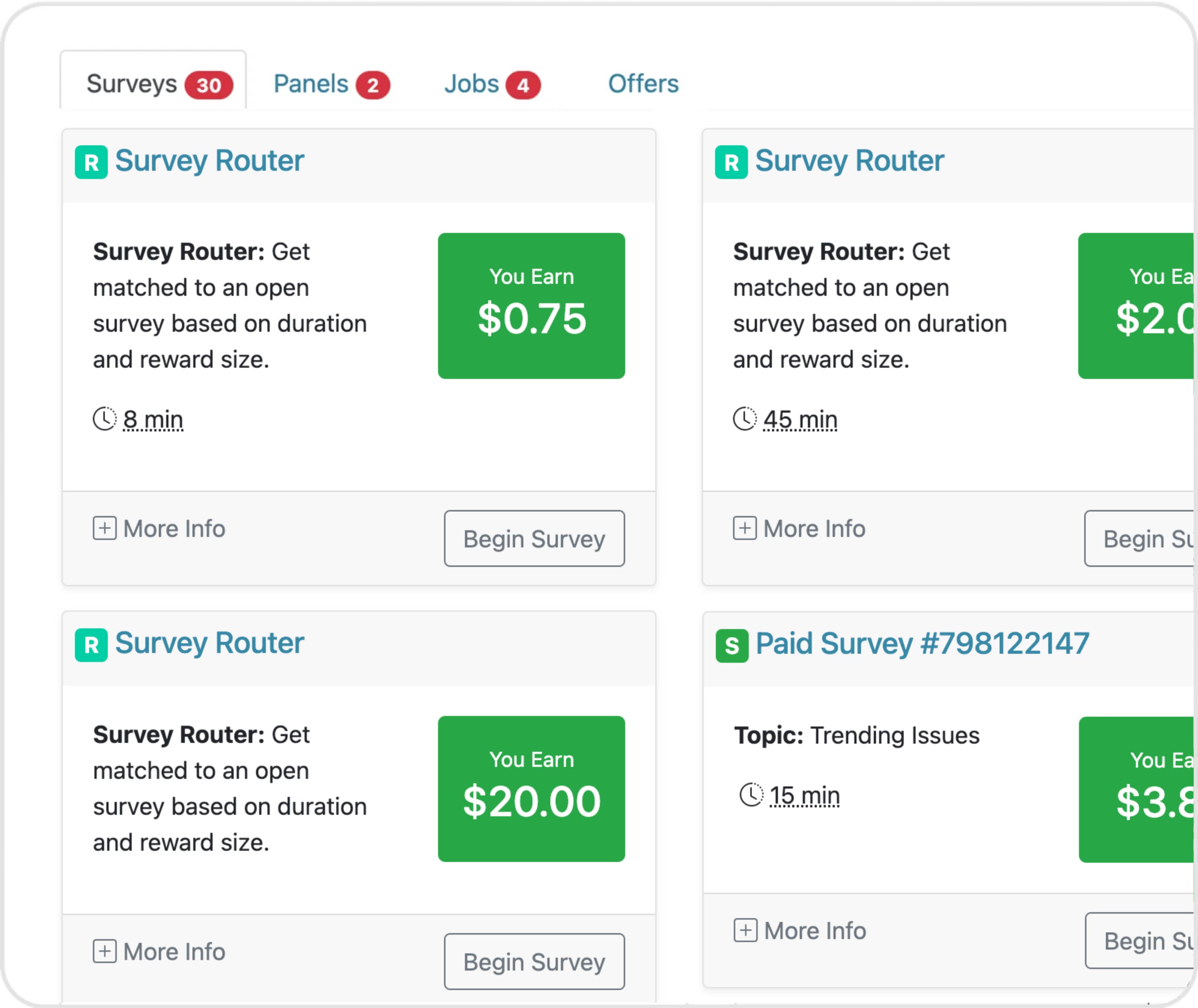
Example survey dashboard
Answer questions. Get paid.

Earn up to $25 / survey

It's pretty straightforward: take surveys, earn real money. We'll send opportunities your way regularly.

Example survey dashboard
  • Log in and see available surveys instantly

  • Each survey shows estimated time and reward upfront

  • Skip any that don't interest you – new surveys added several times daily

Money you can spend today.

Payments are digital and super-fast

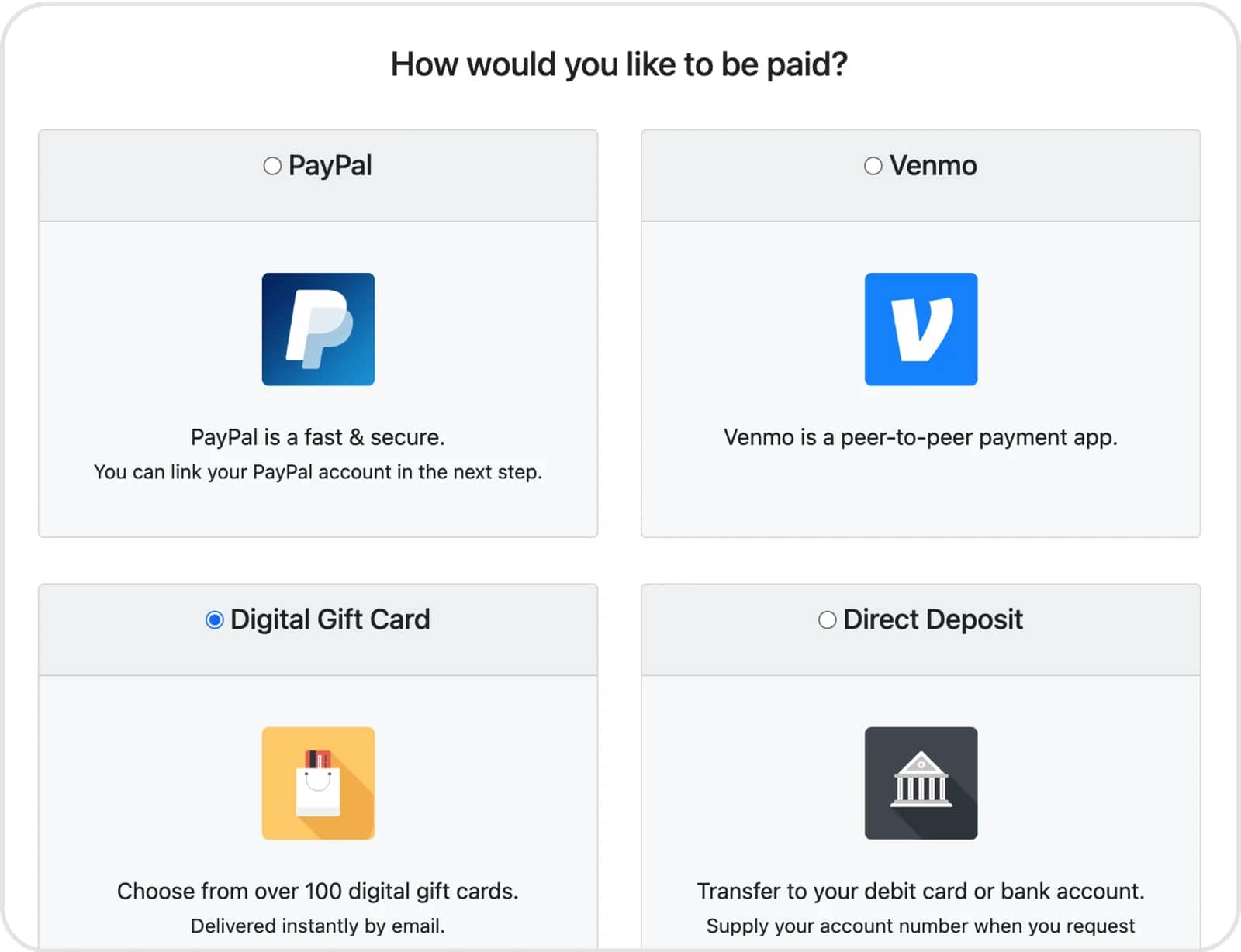
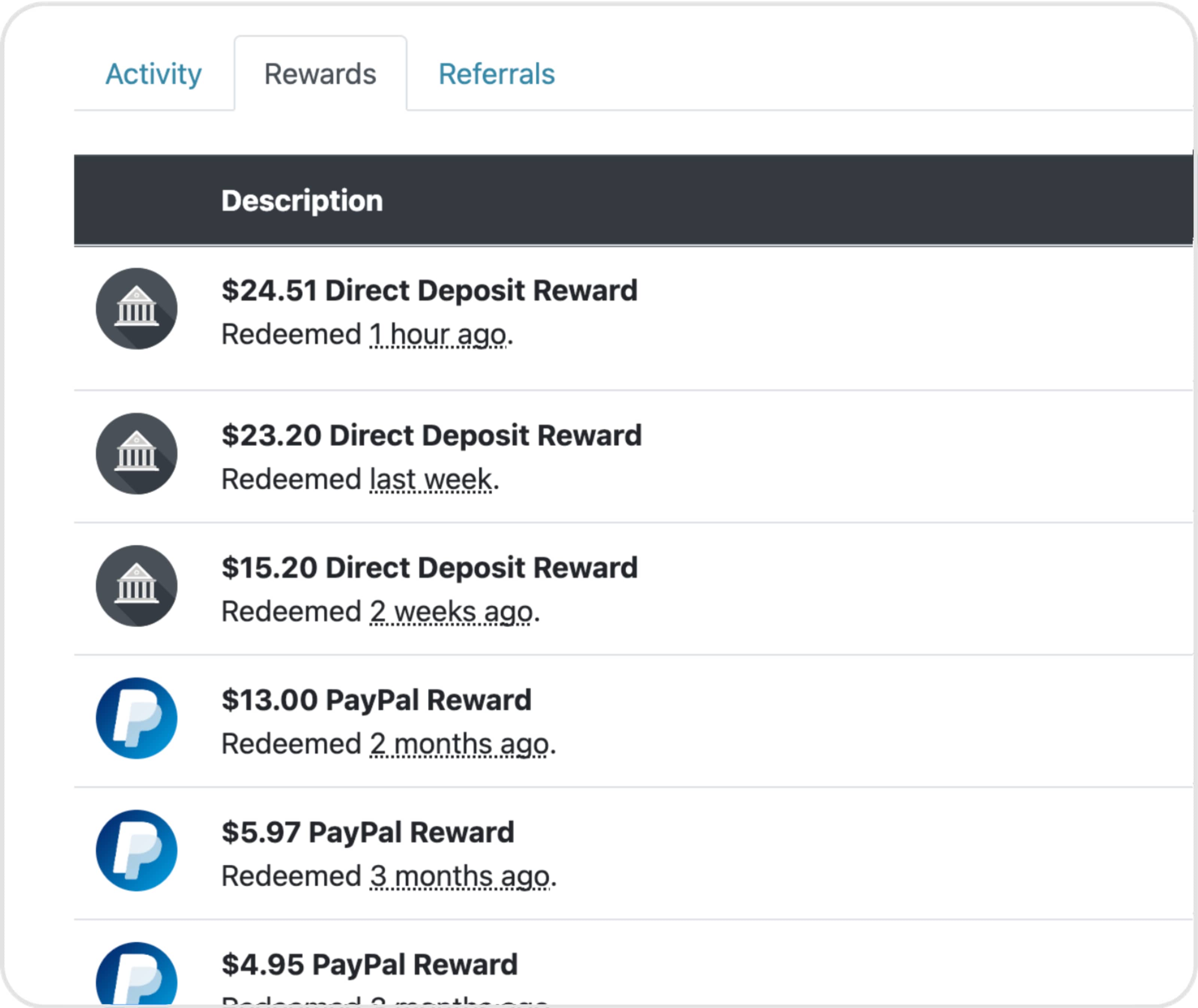
Choose how you want to get paid and receive your money within minutes of cashing out.

supply chain planning coursera answers

No long waiting periods or complicated points systems. Just pick your preferred payment method, cash out your balance, and the money's yours.

supply chain planning coursera answers
Actual cash, no time wasting.

Earn cash, not points

We keep things simple: every survey shows its dollar value right away. No calculators needed to figure out what you've earned.

supply chain planning coursera answers
  • See exactly how much money you'll make before starting

  • Cash amounts displayed in dollars, not confusing point systems

  • Know your total balance at a glance, ready to withdraw anytime

1000 money-making surveys available to take right now

Trending paid surveys this month

Real people earning real money.

Join our 800,000+ happy members


Supply Chain Planning Coursera Answers Info

If you are enrolled in the specialization—typically offered by Rutgers University (Prof. Rudolf Leuschner) or University of Illinois at Urbana-Champaign (Gies College of Business)—you know the content is dense.

You are juggling

Below is a verified answer key for the most common quizzes and exams. Module 1: Demand Forecasting (Week 1) Quiz: Forecasting Fundamentals Q1: What is the primary goal of demand forecasting in supply chain management? Answer: To reduce uncertainty and improve decision-making regarding inventory, production, and capacity. Q2: Which forecasting method uses historical data exclusively to predict future demand? Answer: Time series analysis. Q3: A forecast that consistently has actual sales higher than the forecast is described as: Answer: Biased low (negative error). Q4: Calculate the 3-period Simple Moving Average for Period 5 given: Period 1: 100, Period 2: 110, Period 3: 120, Period 4: 130. Answer: (120 + 130 + ?) Wait—Period 5 uses Periods 2,3,4. (110+120+130)/3 = 120 Q5: In Exponential Smoothing , if Alpha (α) = 0.8, does the forecast react quickly or slowly to recent changes? Answer: Quickly (High alpha = more weight on recent demand). Module 2: Sales & Operations Planning (S&OP) Quiz: Balancing Supply & Demand Q1: The S&OP process typically operates on what time horizon? Answer: Monthly, rolling 12-24 months. Q2: Which S&OP strategy keeps a stable workforce but builds inventory during low demand to meet high demand later? Answer: Level production plan (Chase vs. Level). Q3: You have a Chase Strategy . Demand is 500 units in January and 800 in February. Beginning inventory = 0. Production capacity per month = 300 units. How much subcontracting is needed in February? Answer: February demand (800) – February production (300) = 500 units subcontracted. (January inventory is zero because Chase strategy matches production to demand exactly each month). Q4: What is the correct order of the S&OP maturity model? Answer: 1. Reacting, 2. Anticipating, 3. Collaborating, 4. Orchestrating. Q5: Who is the primary owner of the S&OP process in most mature organizations? Answer: Cross-functional leadership (often led by Supply Chain or a dedicated S&OP manager). Module 3: Inventory Management Quiz: EOQ & Safety Stock Q1: The Economic Order Quantity (EOQ) balances which two costs? Answer: Ordering cost and Holding (carrying) cost. Q2: Given: Annual Demand (D) = 10,000 units, Order Cost (S) = $50, Holding Cost (H) = $5 per unit/year. Calculate EOQ. Answer: √((2 * 10,000 * 50) / 5) = √(1,000,000 / 5) = √200,000 = 447.2 units . Q3: If you increase the Reorder Point (ROP) , what happens to Safety Stock? Answer: Safety stock increases. Q4: A company wants a 99% service level (Z=2.33). Demand standard deviation during lead time is 20 units. Calculate Safety Stock. Answer: Z * σLT = 2.33 * 20 = 46.6 units . Q5: What is the "bullwhip effect"? Answer: Small fluctuations in consumer demand cause increasingly larger fluctuations in orders upstream (to suppliers). Module 4: Distribution & DRP Quiz: Network Planning Q1: Distribution Requirements Planning (DRP) is most similar to which manufacturing system? Answer: Material Requirements Planning (MRP). Q2: A Cross-Dock facility is designed to: Answer: Receive product from inbound trucks and immediately load it onto outbound trucks with minimal storage. Q3: In a Push vs. Pull system: A retailer orders based on current shelf inventory (reorder point). Is this Push or Pull? Answer: Pull (Demand-driven). Q4: Calculate Gross Requirements for a Distribution Center (DC): The DC serves 3 stores. Store A needs 50, Store B 30, Store C 20. No safety stock at the DC. Answer: 50 + 30 + 20 = 100 units . Q5: The "Center of Gravity" method is used for: Answer: Determining the optimal geographic location for a single warehouse or plant. Week 6: Final Exam (Key Concepts) These are the most frequent high-stakes questions. supply chain planning coursera answers

supply chain planning coursera answers

Ready to turn your spare time into extra cash?

Quick signup, real surveys, actual money. Create your free account – and get multiple opportunities to earn every single day.

supply chain planning coursera answers
$1,000,000+

Earned by members in the last 12 months

supply chain planning coursera answers