
A cross platform, customizable graphical frontend for launching emulators and managing your game collection.
A cross platform, customizable graphical frontend for launching emulators and managing your game collection.
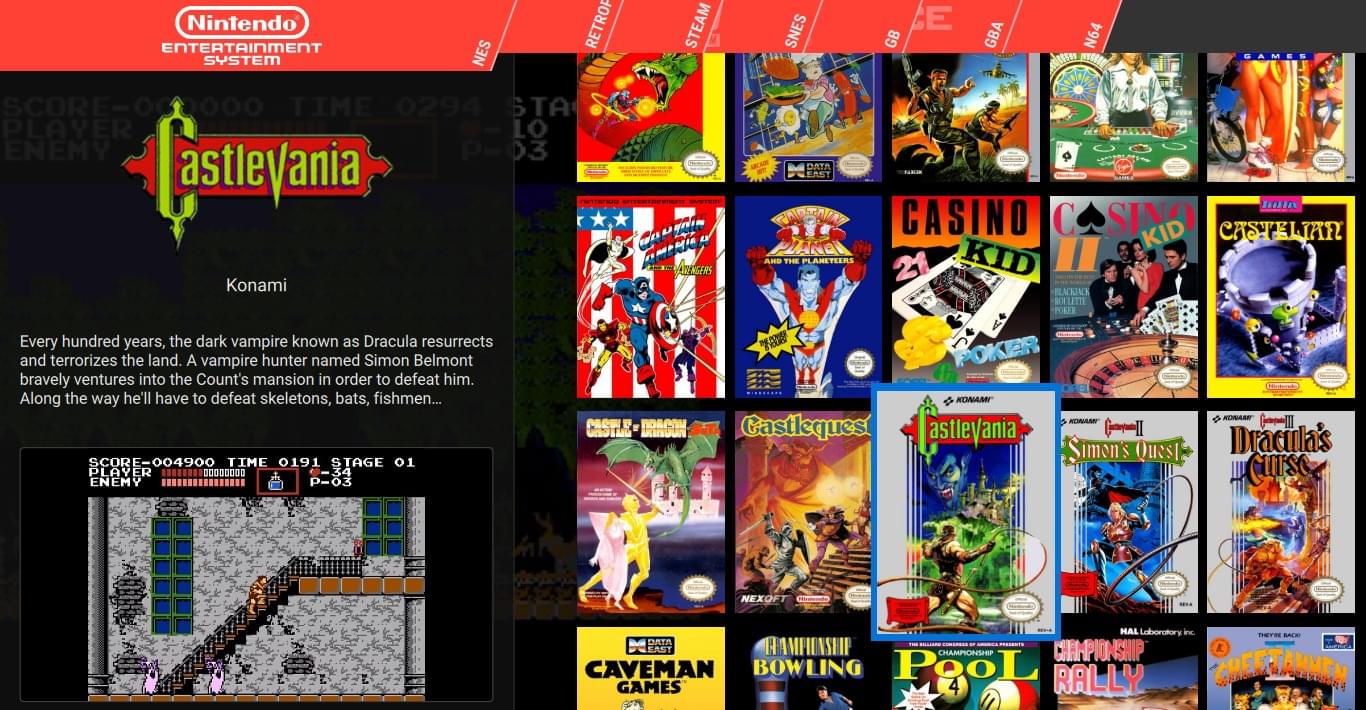

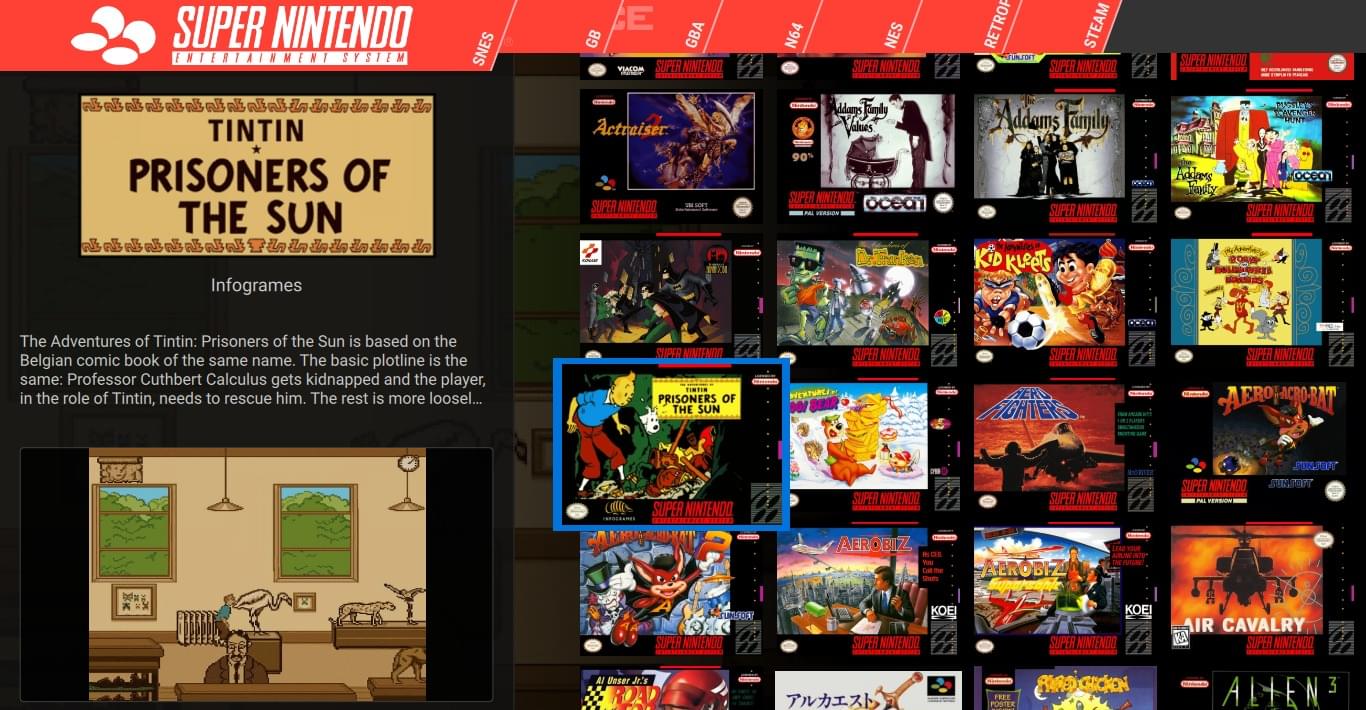
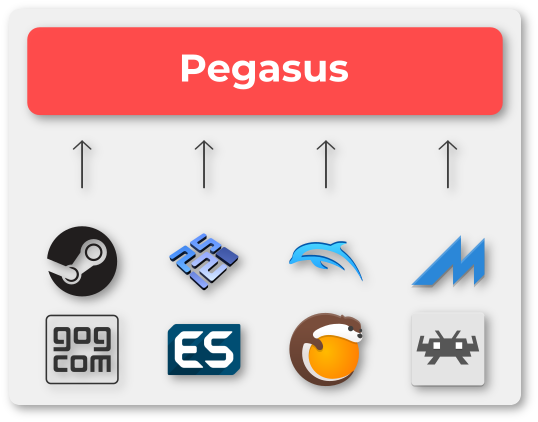
Pegasus is a graphical frontend for browsing your game library (especially retro games) and launching them from one place. It's focusing on customizability, cross platform support (including embedded devices) and high performance.
Instead of launching different games with different emulators one by one manually, you can add them to Pegasus and launch the games from a friendly graphical screen from your couch. You can add all kinds of artworks, metadata or video previews for each game to make it look even better!
With additional themes, you can completely change everything that is on the screen. Add or remove UI elements, menu screens, whatever. Want to make it look like Kodi? Steam? Any other launcher? No problem. You can add animations and effects, 3D scenes, or even run your custom shader code.
Pegasus can run on Linux, Windows, Mac, Raspberry Pi, Odroid and Android devices. It's compatible with EmulationStation metadata and gamelist files, and instantly recognizes your Steam games!
This combination of characters——does not correspond to a standard, documented error code from Dassault Systèmes’ SolidWorks knowledge base. Official SolidWorks errors typically follow formats like Error 1234 , Failed to load DLL , License error -5, -97 , or codes from the SOLIDWORKS Rx tool. The sequence --83 147 0- is anomalous: it contains double dashes, spaces, and a trailing hyphen, which suggests it may be a fragmented display, a copy-paste artifact, or a misinterpretation of a log file entry.
However, if we treat this string as a , we can still construct a meaningful engineering troubleshooting essay around it. Below is a short essay that explores how one might systematically diagnose such an obscure failure in SolidWorks. Decoding the Ghost in the Machine: A Systematic Approach to the Fictitious “SolidWorks Error --83 147 0-” In the world of computer-aided design, few events disrupt workflow as abruptly as an unexpected error dialog. When the message “solidworks error --83 147 0-” appears—a code that exists in no official documentation—the engineer faces a unique challenge: to solve a problem without a known definition. This essay proposes a methodology for tackling such an enigmatic failure, treating the error as a symptom rather than a diagnosis. solidworks error --83 147 0-
The first response should never be a blind click of “OK.” Instead, capture a screenshot, note the exact sequence of actions that preceded the error, and check the Windows Event Viewer (under Application logs) for correlated .NET or SolidWorks-specific events. The strange formatting ( --83 147 0- ) might indicate memory corruption, a graphics driver misinterpreting a variable, or a truncated message from a custom macro or add-in. If the error appears during file open, save, or rebuild, it likely points to a file-specific corruption or a resource conflict. This combination of characters——does not correspond to a
An undocumented error like --83 147 0- is not a dead end but a puzzle. It reminds us that software, for all its precision, can produce chaotic outputs from hidden faults. By methodically isolating variables, decoding numerical clues, and leveraging community knowledge, an engineer transforms an unknown failure into a solvable problem—and perhaps even contributes a new note to the collective wisdom. In the end, the error code itself matters less than the disciplined curiosity it provokes. However, if we treat this string as a


