To LOVE-Ru
InstallmentsAboutHeadlines

1- — -manga Boroboro No Elf San Wo Shiawase Ni Suru Kusuri Uri San Chapter

The chapter’s immediate impact lies in its portrayal of the Elf, whom the narrative deliberately leaves unnamed. The Japanese title’s use of boroboro —a giongo (onomatopoeia) meaning tattered, worn-out, or broken—is visually realized with unflinching honesty. Her ears are chipped, her hair is matted, her clothes are rags, and she collapses in a back alley, indistinguishable from refuse. This is a radical departure from the idealized elf archetype. By reducing the elf to a state of extreme vulnerability, the author strips away the fantasy of immortality and replaces it with the gritty reality of chronic neglect, possibly enslavement or trauma. She does not beg; she simply waits to disappear. This passivity is the story’s central problem: the Elf has lost the will to participate in her own survival.

However, Chapter 1 wisely plants a seed of uncertainty. The Elf does not speak. Her silence is not emptiness but a fortress. The Medicine Seller respects this fortress, never demanding her story or her gratitude. This dynamic creates a gentle tension: the reader knows that physical recovery is only the first step. The title promises to make the Elf “happy,” yet happiness for a traumatized being is not a product but a process. The seller’s medicine can heal the body, but the deeper wounds—the cause of her boroboro state—remain unexplored. The chapter ends not with a smile, but with the Elf sleeping safely for the first time. It is a fragile, temporary victory. The chapter’s immediate impact lies in its portrayal

In conclusion, the first chapter of this manga succeeds because it understands that misery is not picturesque and kindness is not loud. By juxtaposing a shattered elf against a stoic merchant, the narrative redefines heroism as attentive care. It argues that making someone happy begins with the radical act of seeing them as a person when they have been treated as an object. The medicine seller does not save the elf with magic; he saves her with patience, a warm blanket, and the simple, revolutionary belief that even a tattered life is worth the price of a single dose of kindness. For readers weary of epic savior complexes, this quiet opening is a profound breath of fresh air. This is a radical departure from the idealized elf archetype


The chapter’s immediate impact lies in its portrayal of the Elf, whom the narrative deliberately leaves unnamed. The Japanese title’s use of boroboro —a giongo (onomatopoeia) meaning tattered, worn-out, or broken—is visually realized with unflinching honesty. Her ears are chipped, her hair is matted, her clothes are rags, and she collapses in a back alley, indistinguishable from refuse. This is a radical departure from the idealized elf archetype. By reducing the elf to a state of extreme vulnerability, the author strips away the fantasy of immortality and replaces it with the gritty reality of chronic neglect, possibly enslavement or trauma. She does not beg; she simply waits to disappear. This passivity is the story’s central problem: the Elf has lost the will to participate in her own survival.

However, Chapter 1 wisely plants a seed of uncertainty. The Elf does not speak. Her silence is not emptiness but a fortress. The Medicine Seller respects this fortress, never demanding her story or her gratitude. This dynamic creates a gentle tension: the reader knows that physical recovery is only the first step. The title promises to make the Elf “happy,” yet happiness for a traumatized being is not a product but a process. The seller’s medicine can heal the body, but the deeper wounds—the cause of her boroboro state—remain unexplored. The chapter ends not with a smile, but with the Elf sleeping safely for the first time. It is a fragile, temporary victory.

In conclusion, the first chapter of this manga succeeds because it understands that misery is not picturesque and kindness is not loud. By juxtaposing a shattered elf against a stoic merchant, the narrative redefines heroism as attentive care. It argues that making someone happy begins with the radical act of seeing them as a person when they have been treated as an object. The medicine seller does not save the elf with magic; he saves her with patience, a warm blanket, and the simple, revolutionary belief that even a tattered life is worth the price of a single dose of kindness. For readers weary of epic savior complexes, this quiet opening is a profound breath of fresh air.

  1. Comedy
  2. Ecchi
  3. Harem
  4. School
  5. Sci-Fi
  1. XEBEC
Oct 5, 2010 at 7:00pm CEST

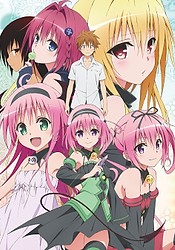
A year after Lala came to Earth, she is all the more determined to make Rito fall for her, putting all her effort into it, even though she knows that Rito actually loves Haruna. Poor Rito will have to face tough times since Lala's younger twin sisters, Nana and Momo, now live in the same house, along with Rito's reliable sister, Mikan, and Celine.

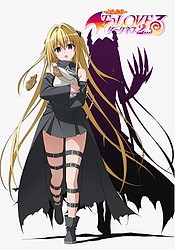
Fun and trouble await with their friends from school, with Lala's usually catastrophic inventions, and Yami's contract to kill Rito...

[Source: AniDB]

  1. Comedy
  2. Ecchi
  3. Harem
  4. Romance
  5. School
  6. Sci-Fi
  1. XEBEC
Oct 5, 2012 at 6:00pm CEST

As close encounters of the twisted kind between the residents of the planet Develuke (represented primarily by the female members of the royal family) and the inhabitants of Earth (represented mainly by one very exhausted Rito Yuki) continue to escalate, the situation spirals even further out of control. When junior princesses Nana and Momo transferred into Earth School where big sister LaLa can (theoretically) keep an eye on them, things SHOULD be smooth sailing. But when Momo decides she'd like to "supplement" Rito's relationship with LaLa with a little "sisterly love," you know LaLa's not going to waste any time splitting harems. Unfortunately, it's just about that point that Yami, the Golden Darkness, enters the scene with all the subtleness of a supernova, along with an army of possessed high school students! All of which is certain to make Rito's life suck more than a black hole at the family picnic. Unless, of course, a certain semi-demonic princess can apply a little of her Develukean Whoop Ass to exactly that portion of certain other heavenly bodies!

[Source: Sentai Filmworks]

  1. Comedy
  2. Ecchi
  3. Harem
  4. Romance
  5. School
  6. Sci-Fi
  1. XEBEC
Jul 6, 2015 at 5:00pm CEST

Rito Yuki has more women in his life than he knows what to do with. In case it wasn’t enough to have all three Devilukean princesses under one roof, he now has alien girls from all over the galaxy attending his school, too! But when the arrival of a mysterious red-haired girl threatens one of their own, Rito and the girls must stand up to a powerful adversary- the likes of which they’ve never seen before.

[Source: Crunchyroll]

  1. Comedy
  2. Ecchi
  3. Harem
  4. Romance
  5. School
  6. Sci-Fi
  1. XEBEC
Jan 4, 2016 at 1:00am CET

A scan of Jump SQ's September issue, to be released on August 4, revealed that the fifteenth volume of To LOVE-Ru Darkness will bundle a new OVA, which will be released on January 4. Consisting of two episodes, the OVA will run for a total of 25 minutes. One episode, titled Ghost Story Kowai no wa Ikaga (How about something scary?), will adapt a side-story from volume nine. The second episode, titled Clinic Sunao ni Narenakute (Without becoming obedient), will adapt chapter 38.

[Source: MyAnimeList News]

Advertisement