When most people think of Japanese entertainment, the "Big Three" pillars still come to mind: , J-Pop (and Idols) , and Video Games . And yes, those juggernauts are bigger than ever.
The biggest act of 2026 is a "Hybrid Unit"—a band where the guitarist is a virtual YouTuber, the vocalist is a former idol, and the drummer is a 70-year-old jazz legend. Furthermore, is no longer a niche genre for record collectors. It has evolved into "Neo-City Pop"—taking the 80s funk basslines and layering them with hyperpop distortion and rap verses.
While Hollywood chases franchises, Japan chases hybridity . It mixes old with new, digital with analog, polite with absurd. To consume Japanese culture in 2026 is to accept that the strangest, most specific idea (like a dating sim where you romance vending machines) will probably be the next global hit.
Here is what you need to watch, listen to, and play right now. For decades, J-Dramas followed a strict formula: 10-11 episodes, 45 minutes each, airing weekly. But attention spans have shifted. In 2026, the breakout hits are vertical short dramas (Tate-drama).
It is trendy right now to visit "Sentō" (public bathhouses) that have been converted into live music venues, or to attend "E-sports Sumo" where professional wrestlers compete in VR simulators. The hottest ticket in Tokyo isn't a concert—it’s a experience where you drink sake while a rakugo storyteller performs horror tales via bone-conduction headphones. 5. The Return of Practical Effects in Cinema Godzilla Minus One changed the game. In 2026, Japanese cinema is rejecting CGI overload. Directors are returning to suitmation (suit acting), miniature explosions, and hand-drawn compositing.
Ado’s latest rock-opera single (because she remains the undisputed queen of vocal range) and Vaundy’s secret late-night EP . 3. The Anime Industry’s "Labor Awakening" We can’t talk about the culture without acknowledging the industry behind it. 2026 is a historic year for anime. For the first time, major animation unions have successfully bargained for AI-assisted workflow protections .
Beyond the Headlines: Why 2026 is the Year of “Glocal” Japanese Entertainment
No, this isn't about replacing artists. It's about eliminating the "black industry" (overwork). New contracts limit in-between animation frames and mandate 3-day weekends for key animators. The result? Better looking shows. Studios like Kyoto Animation and MAPPA are leading a renaissance where the art looks stunning not despite the schedule, but because of the humane treatment of staff. While tourists still flock to Super Nintendo World, Gen Z travelers are looking for something deeper: Cultural Soundscapes.
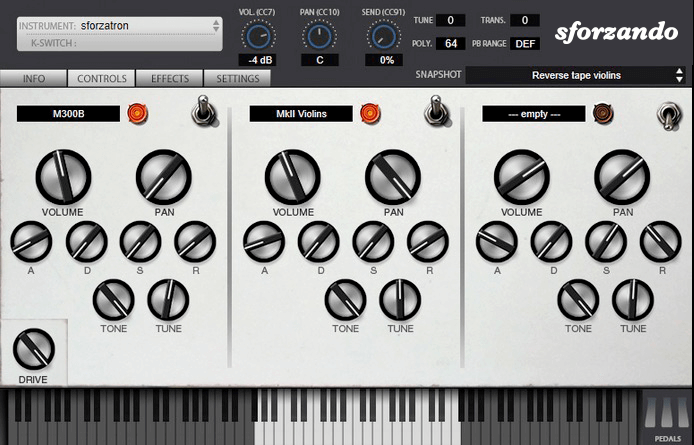
The SFZ Format is widely accepted as the open standard to define the behavior of a musical instrument from a bare set of sound recordings. Being a royalty-free format, any developer can create, use and distribute SFZ files and players for either free or commercial purposes. So when looking for flexibility and portability, SFZ is the obvious choice. That’s why it’s the default instrument file format used in the ARIA Engine.
OEM developers and sample providers are offering a range of commercial and free sound banks dedicated to sforzando. Go check them out! And watch that space often, there’s always more to come! You are a developer and want to make a product for sforzando? Contact us!
You can also drop SF2, DLS and acidized WAV files directly on the interface, and they will automatically get converted to SFZ 2.0, which you can then edit and tweak to your liking!
Download for freeInstrument BanksSupport
When most people think of Japanese entertainment, the "Big Three" pillars still come to mind: , J-Pop (and Idols) , and Video Games . And yes, those juggernauts are bigger than ever.
The biggest act of 2026 is a "Hybrid Unit"—a band where the guitarist is a virtual YouTuber, the vocalist is a former idol, and the drummer is a 70-year-old jazz legend. Furthermore, is no longer a niche genre for record collectors. It has evolved into "Neo-City Pop"—taking the 80s funk basslines and layering them with hyperpop distortion and rap verses.
While Hollywood chases franchises, Japan chases hybridity . It mixes old with new, digital with analog, polite with absurd. To consume Japanese culture in 2026 is to accept that the strangest, most specific idea (like a dating sim where you romance vending machines) will probably be the next global hit. When most people think of Japanese entertainment, the
Here is what you need to watch, listen to, and play right now. For decades, J-Dramas followed a strict formula: 10-11 episodes, 45 minutes each, airing weekly. But attention spans have shifted. In 2026, the breakout hits are vertical short dramas (Tate-drama).
It is trendy right now to visit "Sentō" (public bathhouses) that have been converted into live music venues, or to attend "E-sports Sumo" where professional wrestlers compete in VR simulators. The hottest ticket in Tokyo isn't a concert—it’s a experience where you drink sake while a rakugo storyteller performs horror tales via bone-conduction headphones. 5. The Return of Practical Effects in Cinema Godzilla Minus One changed the game. In 2026, Japanese cinema is rejecting CGI overload. Directors are returning to suitmation (suit acting), miniature explosions, and hand-drawn compositing. Furthermore, is no longer a niche genre for
Ado’s latest rock-opera single (because she remains the undisputed queen of vocal range) and Vaundy’s secret late-night EP . 3. The Anime Industry’s "Labor Awakening" We can’t talk about the culture without acknowledging the industry behind it. 2026 is a historic year for anime. For the first time, major animation unions have successfully bargained for AI-assisted workflow protections .
Beyond the Headlines: Why 2026 is the Year of “Glocal” Japanese Entertainment It mixes old with new, digital with analog,
No, this isn't about replacing artists. It's about eliminating the "black industry" (overwork). New contracts limit in-between animation frames and mandate 3-day weekends for key animators. The result? Better looking shows. Studios like Kyoto Animation and MAPPA are leading a renaissance where the art looks stunning not despite the schedule, but because of the humane treatment of staff. While tourists still flock to Super Nintendo World, Gen Z travelers are looking for something deeper: Cultural Soundscapes.