In the ever-evolving landscape of dystopian fiction and competitive reality satire, few tropes are as instantly recognizable—or as ripe for reinvention—as the "Elimination Tower." A staple of narratives ranging from the literary classic Battle Royale to the televised spectacle of The Challenge , the tower symbolizes a vertical crucible where characters are stripped of their alliances, their comforts, and ultimately, their agency. However, a "new script" centered on an Elimination Tower demands a radical departure from the simple spectacle of survival. It must transcend the gladiatorial pit to become a complex psychological and philosophical arena. This essay argues that a modern Elimination Tower narrative should not ask who survives, but what the act of elimination truly means when the tower itself becomes a sentient, moral, and reflective engine of judgment.

In crafting a new script for the Elimination Tower, writers have the opportunity to evolve a tired genre into a poignant allegory. By shifting focus from physical survival to emotional and ethical complexity, by making the tower an active judge rather than a passive stage, and by ultimately rejecting the premise of elimination itself, the narrative can achieve what all great dystopian fiction aims for: to hold a dark mirror to our own world. In the end, the most terrifying elimination is not being pushed from a great height—it is being reduced to a single data point in someone else’s calculation. The new script’s task is to remind us that we are more than that, and that the only tower worth building is the one we choose to tear down.

Finally, the ending of such a script must subvert the climax. The final contestant, reaching the penthouse expecting a throne, finds instead an empty room with a single button labeled "Abolish." Pressing it does not grant victory; it disables the Tower’s judgment system, freeing all eliminated contestants and erasing the hierarchy. The ultimate act of winning, the script suggests, is to refuse the game entirely. This conclusion resonates deeply with contemporary anxieties about social ranking, algorithmic control, and the brutal meritocracy of modern life. The Elimination Tower is not just a setting; it is a metaphor for the invisible structures that grade, sort, and discard us daily.

Traditionally, the elimination tower is a passive structure—a staircase, a platform, or a high-rise where contestants are removed one by one until a sole victor remains. The drama derives from external mechanics: alliances, physical prowess, and the randomness of chance. A new script, however, inverts this formula. Imagine the Tower not as a set piece but as an active participant. It is an algorithm, a god-like AI, or a magical construct that observes every whispered betrayal, every act of altruism, and every suppressed emotion. In this version, the "Elimination" is not a vote cast by rivals but a verdict rendered by the Tower’s own warped logic. This shift transforms the protagonist’s goal from outlasting others to outsmarting the very system of judgment. The enemy is no longer the competitor beside you; it is the architecture itself.

Furthermore, a new script would challenge the binary of winner and loser. What if "Elimination" does not mean death or exile, but a form of transformation? Perhaps those who are "dropped" from the tower are not removed from the narrative but are transported to a parallel space—a foundation, a basement, or an alternate dimension—where they must build a new society from the discarded elements of the tower above. The script would then cut between the desperate competition of the upper floors and the collaborative, utopian (or dystopian) construction below. The question shifts from "Who is the strongest?" to "Which method of human organization—competitive elimination or cooperative salvage—is more valid?" This dual narrative structure allows the script to critique the very culture of zero-sum games that elimination towers typically celebrate.

The core thematic innovation of this new script lies in its redefinition of "strength." In conventional tower narratives, the physically dominant or the ruthlessly strategic survive. But an intelligent Tower could prioritize entirely different metrics: emotional resilience, creativity, or even the capacity for genuine remorse. For instance, a floor might be cleared only when a contestant confesses a secret they have never told anyone, or when two rivals reconcile. This turns elimination into a forced psychoanalysis, weaponizing vulnerability. The audience, therefore, watches not for who will cheat the best, but who will grow the most—or shatter the most spectacularly. The Tower becomes a laboratory for the human condition, where elimination is synonymous with revelation.

How It Works ⚙️

Simple, intuitive design tools at your fingertips

Elimination Tower New Script May 2026

In the ever-evolving landscape of dystopian fiction and competitive reality satire, few tropes are as instantly recognizable—or as ripe for reinvention—as the "Elimination Tower." A staple of narratives ranging from the literary classic Battle Royale to the televised spectacle of The Challenge , the tower symbolizes a vertical crucible where characters are stripped of their alliances, their comforts, and ultimately, their agency. However, a "new script" centered on an Elimination Tower demands a radical departure from the simple spectacle of survival. It must transcend the gladiatorial pit to become a complex psychological and philosophical arena. This essay argues that a modern Elimination Tower narrative should not ask who survives, but what the act of elimination truly means when the tower itself becomes a sentient, moral, and reflective engine of judgment.

In crafting a new script for the Elimination Tower, writers have the opportunity to evolve a tired genre into a poignant allegory. By shifting focus from physical survival to emotional and ethical complexity, by making the tower an active judge rather than a passive stage, and by ultimately rejecting the premise of elimination itself, the narrative can achieve what all great dystopian fiction aims for: to hold a dark mirror to our own world. In the end, the most terrifying elimination is not being pushed from a great height—it is being reduced to a single data point in someone else’s calculation. The new script’s task is to remind us that we are more than that, and that the only tower worth building is the one we choose to tear down. Elimination Tower New Script

Finally, the ending of such a script must subvert the climax. The final contestant, reaching the penthouse expecting a throne, finds instead an empty room with a single button labeled "Abolish." Pressing it does not grant victory; it disables the Tower’s judgment system, freeing all eliminated contestants and erasing the hierarchy. The ultimate act of winning, the script suggests, is to refuse the game entirely. This conclusion resonates deeply with contemporary anxieties about social ranking, algorithmic control, and the brutal meritocracy of modern life. The Elimination Tower is not just a setting; it is a metaphor for the invisible structures that grade, sort, and discard us daily. In the ever-evolving landscape of dystopian fiction and

Traditionally, the elimination tower is a passive structure—a staircase, a platform, or a high-rise where contestants are removed one by one until a sole victor remains. The drama derives from external mechanics: alliances, physical prowess, and the randomness of chance. A new script, however, inverts this formula. Imagine the Tower not as a set piece but as an active participant. It is an algorithm, a god-like AI, or a magical construct that observes every whispered betrayal, every act of altruism, and every suppressed emotion. In this version, the "Elimination" is not a vote cast by rivals but a verdict rendered by the Tower’s own warped logic. This shift transforms the protagonist’s goal from outlasting others to outsmarting the very system of judgment. The enemy is no longer the competitor beside you; it is the architecture itself. This essay argues that a modern Elimination Tower

Furthermore, a new script would challenge the binary of winner and loser. What if "Elimination" does not mean death or exile, but a form of transformation? Perhaps those who are "dropped" from the tower are not removed from the narrative but are transported to a parallel space—a foundation, a basement, or an alternate dimension—where they must build a new society from the discarded elements of the tower above. The script would then cut between the desperate competition of the upper floors and the collaborative, utopian (or dystopian) construction below. The question shifts from "Who is the strongest?" to "Which method of human organization—competitive elimination or cooperative salvage—is more valid?" This dual narrative structure allows the script to critique the very culture of zero-sum games that elimination towers typically celebrate.

The core thematic innovation of this new script lies in its redefinition of "strength." In conventional tower narratives, the physically dominant or the ruthlessly strategic survive. But an intelligent Tower could prioritize entirely different metrics: emotional resilience, creativity, or even the capacity for genuine remorse. For instance, a floor might be cleared only when a contestant confesses a secret they have never told anyone, or when two rivals reconcile. This turns elimination into a forced psychoanalysis, weaponizing vulnerability. The audience, therefore, watches not for who will cheat the best, but who will grow the most—or shatter the most spectacularly. The Tower becomes a laboratory for the human condition, where elimination is synonymous with revelation.
2

Activate the Tool

Click on the extension icon and select the tool you need, or use the right-click context menu.

Extension dropdown menu with tool options
3

Use with Precision

Interact with the webpage to measure elements, identify fonts, or pick colors with pixel-perfect accuracy.

Measurement tool in action on a webpage

Installation Guide 💻

Install Web Design Ruler from official stores or as an unpacked extension

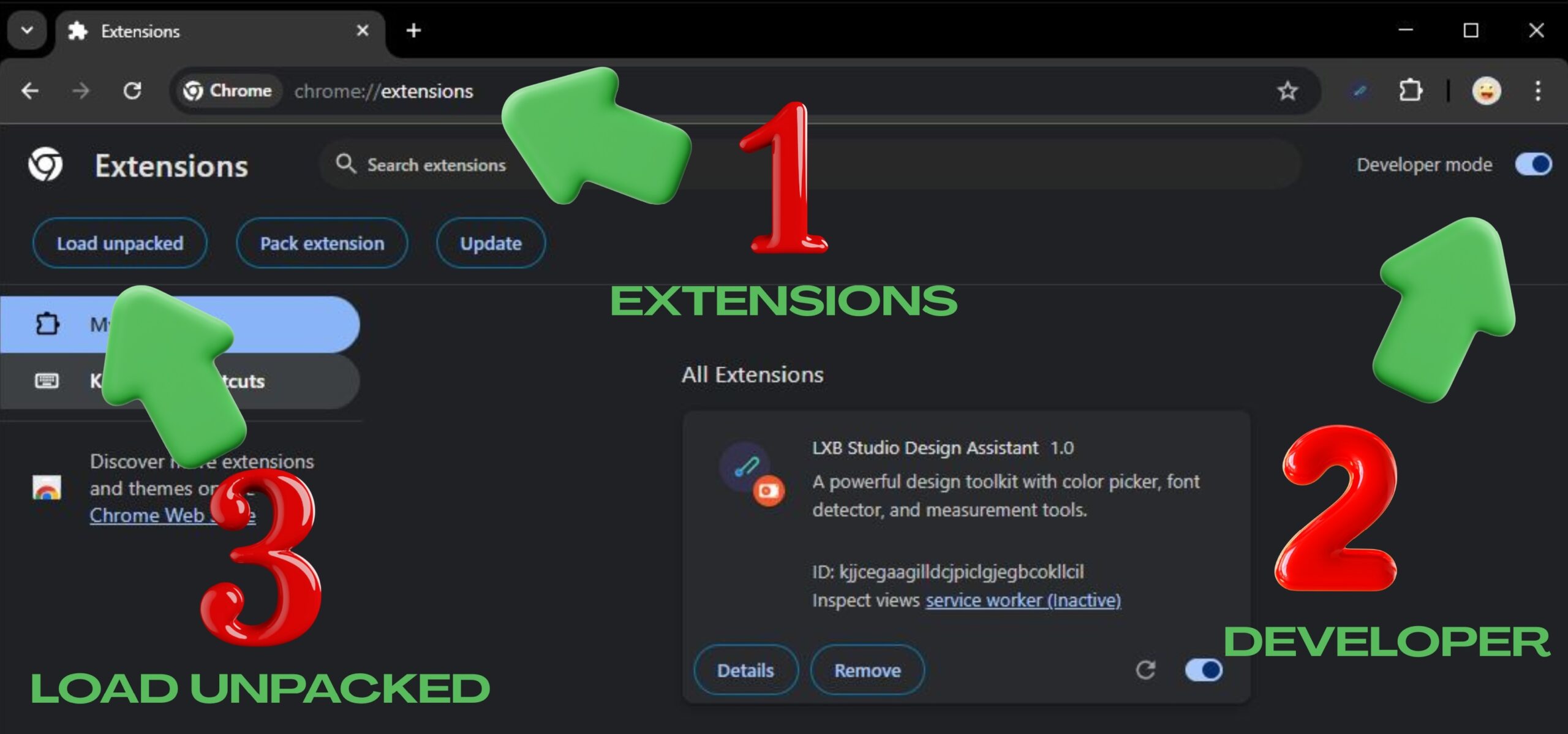
Chrome extensions page showing load unpacked process

Install from Official Stores (Best)

For Chrome: Visit the Chrome Web Store and click "Add to Chrome". For Firefox: Visit Firefox Add-ons and click "Add to Firefox".

Or Download Extension Files

Download the Web Design Ruler extension files from this website. Save the ZIP file to your computer and extract it.

Open Extensions Page

For Chrome: Type chrome://extensions in the address bar. For Firefox: Type about:addons in the address bar.

Enable Developer Mode (Chrome Only)

Toggle on the "Developer mode" switch in the top-right corner of the Extensions page.

Load Unpacked Extension

Click the "Load unpacked" button and navigate to the folder where you extracted the extension files. Select the folder and click "Select Folder".

⚠️ Important Warning for Manual Installation

Do not delete or move the extension folder after installation. Since this is an unpacked extension, Chrome needs the folder to remain in its original location. If you delete or move the folder, the extension will stop working.

Privacy & Security 🔒

Your privacy and security are our top priorities

No Data Collection

Web Design Ruler operates entirely on your device. We don't collect, store, or transmit any of your data or browsing history to our servers or third parties.

Limited Permissions

Our extension only requests the minimum permissions needed to function. We can only access the active tab when you explicitly activate one of our tools.

Clean Code

No ads, no trackers, no bloat. The extension is built with clean, efficient code focused solely on providing helpful design tools.

Open

The extension is built with transparent practices. You can inspect the code yourself since it's installed as an unpacked extension.

Malware-Free

Our extension contains no malware or harmful code. It's a simple, focused tool created by designers for designers at LXB Studio.

Works Offline

All functionality works completely offline. No internet connection is required for the tools to operate after installation.

Why We Built This 💡

As web designers and developers at LXB Studio, we often found ourselves switching between multiple tools to measure elements, identify fonts, and pick colors from websites. This workflow was inefficient and interrupted our creative process.

We built Web Design Ruler to solve these pain points and create a streamlined workflow for ourselves and the design community.

  • Eliminate the need for multiple extensions.
  • Create pixel-perfect designs with accurate measurements.
  • Identify and replicate beautiful typography.
  • Extract exact colors for design consistency.
  • Speed up the web design process.

We've made it free and open because we believe in giving back to the design community that has given us so much.

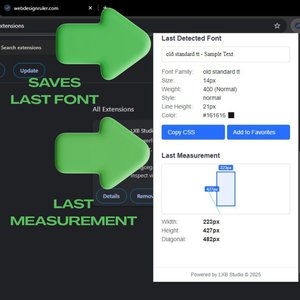
Web Design Ruler extension popup interface

Frequently Asked Questions ❓

Got questions? We've got answers

Which browsers are supported?

Web Design Ruler works with Google Chrome, Firefox, and Chromium-based browsers like Microsoft Edge, Brave, Opera, and Vivaldi. Install from the Chrome Web Store, Firefox Add-ons, or download the extension files directly.

Is Web Design Ruler free to use?

Yes! Web Design Ruler is completely free to use. We created it to simplify web design workflows and give back to the design community.

Can I use the extension on any website?

Yes, you can use Web Design Ruler on any website. However, it cannot be used on browser pages like the Chrome Web Store, Settings, or New Tab page due to Chrome's security restrictions.

Why is it distributed as an unpacked extension?

We offer both options! You can install from official stores (Chrome Web Store and Firefox Add-ons) or download it as an unpacked extension for those who prefer manual installation or want to inspect the code.

Why can't I delete the extension folder?

Chrome loads unpacked extensions directly from the folder location you specify during installation. If you delete or move this folder, Chrome can no longer find the extension files, and it will stop working. This is different from extensions installed from the Chrome Web Store, which are stored in Chrome's internal storage.

How accurate are the measurements?

The measurement tool provides pixel-perfect accuracy based on the rendered elements in the browser. It measures exactly what you see on screen.

Can it identify all fonts?

The font detector can identify any font that's actively loaded and applied to text on the webpage. It cannot identify fonts in images or custom fonts that use non-standard loading methods.

How do I report bugs or request features?

We welcome your feedback! Please contact us through our contact page to report bugs or suggest new features.

Ready to Design with Precision? 🚀

Download Web Design Ruler today and transform your web design workflow with powerful measurement, font identification, and color picking tools.

Get Started Now