Cabininthewoods Audio May 2026
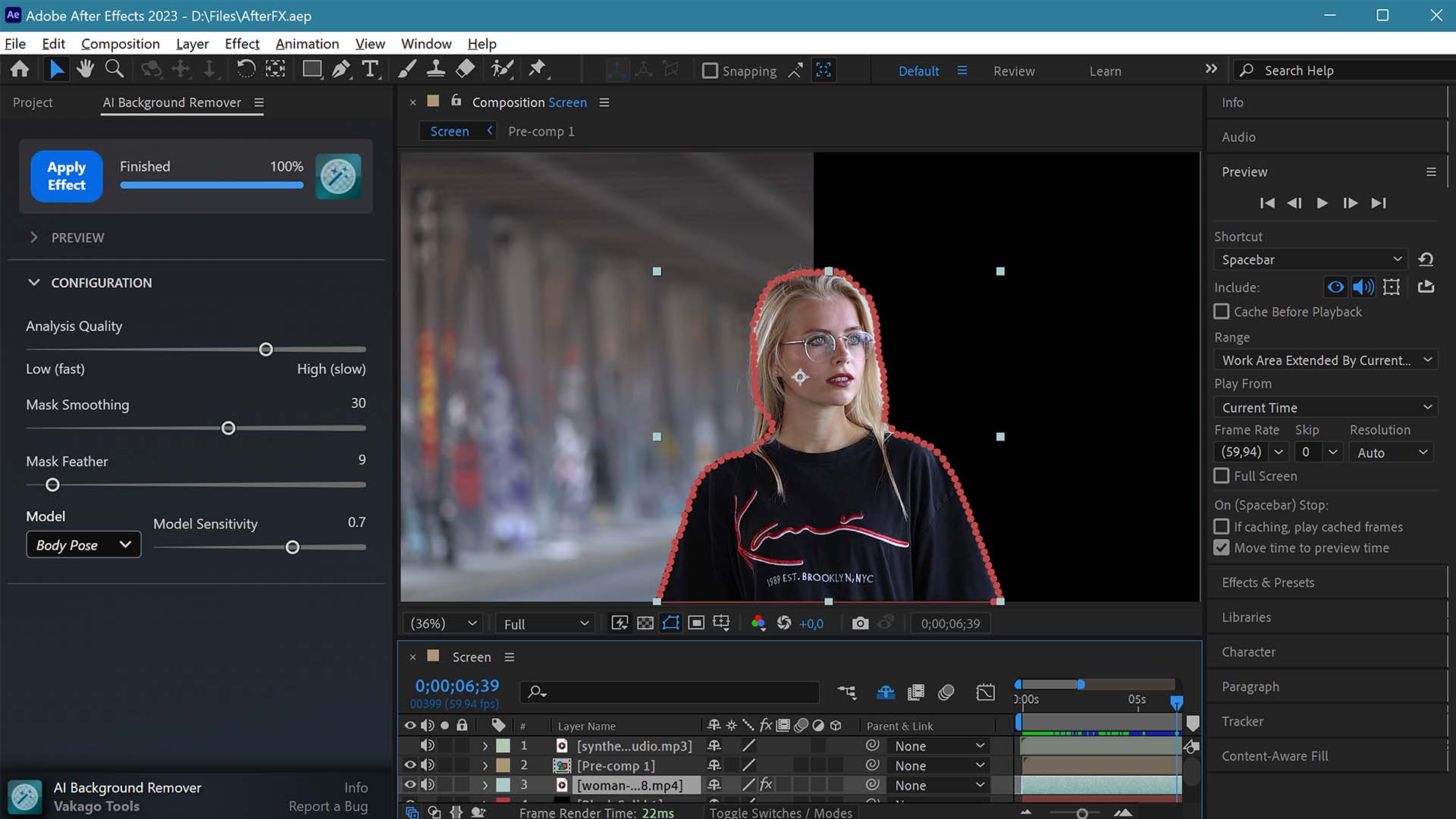
The AI Background Remover is an extension for Adobe Premiere Pro and After Effects that uses artificial intelligence to automatically create masks and remove video backgrounds.
With this extension, you can create professional-looking masks and bokeh effects with ease. Whether you're working on social media, corporate videos, or gaming content, the plugin is designed to handle any background.
Use the buttons below to download the AI Background Remover plugin or learn more about it's capabilities.
Cabininthewoods Audio May 2026
The film suggests that horror fans don't just watch violence; we listen to it. We demand the creaking door, the footstep on the stair, the wet stab. By exposing the mechanics of those sounds—by showing us the button that triggers the scream—Goddard and his sound team turned the horror movie into a puppet show. And for the first time, we could hear the strings. When you rewatch the film, close your eyes during any facility scene. Count the beeps. Then open them during a cabin scene. The contrast will ruin (and improve) every other horror movie you watch from then on.
This is genius. The banality of the sound underscores the film’s thesis: horror is a mundane bureaucracy. The button isn't heroic or terrifying. It is the sound of a middle-manager approving a spreadsheet. Later, when the "System Purge" happens—releasing all the monsters at once—the audio doesn’t become a chaotic wall of noise. Instead, it becomes a layered symphony of distinct, recognizable horror tropes: the ch-ch-ch of Friday the 13th , the wet gurgle of a zombie, the metallic scrape of a Hellraiser-esque chain. The sound doesn't scare you; it reminds you that you are watching a controlled demolition of genre. The film’s most famous audio joke revolves around a character who never makes a sound. Marty (Fran Kranz) obsesses over the "Merman" in the facility’s collection. For the entire film, the Merman sits in his tank, silent. cabininthewoods audio
In a film about control, manipulation, and the "puppeteers" behind the horror, the audio isn't just atmospheric—it is the mechanism of control. From the hum of fluorescent lights to the silent scream of a mermaid, the sound design of The Cabin in the Woods is a masterclass in hiding the truth in plain sight. The film’s audio brilliance begins with its central duality: the raw, natural acoustics of the cabin versus the sterile, digital precision of the facility. The film suggests that horror fans don't just
The sound mix is telling you who the real monsters are. The teens are human. The facility workers are human. The Director, however, sounds like a ghost. She is already dead. She is a relic. The audio places her outside the natural world, aligning her with the Ancient Ones. The Cabin in the Woods is a film about sacrifice—specifically, the sacrifice of horror tropes to appease a bored audience (the Ancient Ones). The audio design is the thread that holds the metaphor together. Every beep, every crunch of leaves, every silent Merman is a signpost. And for the first time, we could hear the strings
When Drew Goddard’s The Cabin in the Woods premiered in 2012, it was immediately hailed as a deconstruction of horror cinema. Critics praised its satirical takedown of slasher tropes, its Lovecraftian third act, and Richard Jenkins’ deadpan delivery. But one element rarely gets its due: the sound.
In the cabin, sound is organic. When Curt jumps the gorge on his dirt bike, we hear the gravel crunch, the wind shear, and the hollow thud of metal hitting dirt. These sounds are warm, with a long reverb that suggests the vast, indifferent forest. They lull the audience into the classic slasher comfort zone.
Then we cut to the facility. Suddenly, the audio flattens. The reverb disappears. Every beep of a console, every squeak of a lab coat, every pneumatic hiss of a door is crisp, isolated, and clinical. Director Drew Goddard and sound designer John K. Adams deliberately gave the facility a "near-field" soundscape—as if you are inside a helmet. The purpose is disorientation. The shift in audio dynamics tells your brain, “You are not safe. You are not in the woods. You are in a cage.” The most iconic sound in the film is the Purge Button . It is a large, red, plastic button surrounded by a metal cage. When Gary Sitterson (Richard Jenkins) flips the safety cap and presses it, the sound isn’t a satisfying explosion. It is a quiet, bureaucratic clack . It sounds like a stapler.